DURGA
Slaying inner demons: designing for embodied restoration

PROJECT TYPE
Independent project
DELIVERABLES
Functioning prototype, concept video, project presentation
TEAM
1 Designer and maker, 1 Maker and electronics expert
MY ROLE
Solo designer, maker, researcher
STATUS
Reshape 19 | Cognified Matter — finalist, Smart Products category
CONTEXT
Most interventions for stress and anxiety work cognitively — they ask you to think differently, reframe, regulate. But when anxiety peaks, the cognitive mind is often the last thing with access to the controls. The body gets there first: the tightened chest, the hunched shoulders, the shallow breath, the racing mind that won't slow down.
Durga starts from a different premise. Rather than asking the mind to calm the body, it invites the body to calm the mind.
Named after the invincible Hindu goddess known as the Demon Slayer, Durga is an interactive wearable garment that helps people build the habit of returning intentionally to their bodies when experiencing stress or anxiety — giving themselves soothing, grounding touch to slow down, get out of their heads, and redirect their energy toward wellbeing. The intervention is not therapeutic in a clinical sense. It is somatic, pleasurable, and self-directed — an act of self-empathy made tangible through design.
CHALLENGE
Durga is, at its core, a behavioural intervention. The behaviour it supports is re-embodiment: the practice of consciously returning to bodily sensation as a way of interrupting anxiety and restoring presence.
This is harder than it sounds. When we are stressed, our instinct is to tighten, withdraw, and push through. The idea of pausing to tend to ourselves — to press a hand to our chest, to breathe slowly, to feel — runs counter to everything the stress response is telling us to do.
The design challenge was to make that return feel not like an effort, but like a relief. To create something so immediate, so pleasurable, and so responsive to touch that the body's own intelligence could take over from the anxious mind.
PROCESS
Grounding the design in ancient knowledge
The five acupressure points embedded in Durga were researched and chosen deliberately, drawing on the principles of Traditional Chinese Medicine.
The central point, positioned at the chest, is known in Chinese acupressure as the Sea of Tranquility. Pressing or tapping on it is a well-documented practice for soothing acute anxiety — it sits at the convergence of breath, heart, and emotional centre. Two points on the clavicles and two on the upper back and shoulders address a different dimension of embodied stress: the chronic tension that accumulates in people who spend their days crouched over screens. These areas are among the first to tighten under prolonged stress, contributing to poor posture and tension headaches — and among the most responsive to deliberate, sustained touch.
By positioning the garment's sensors at these points, Durga turns the act of pressing on oneself into a functional, meaningful gesture. The technology amplifies what touch alone already knows how to do.
The interaction
When a user presses on any of the five acupressure points, Durga activates a vibration massage at that location — sustained for as long as the pressure is held. The vibration functions as an enhancer of traditional acupressure, combining touch, technology, and breath into a single embodied act.
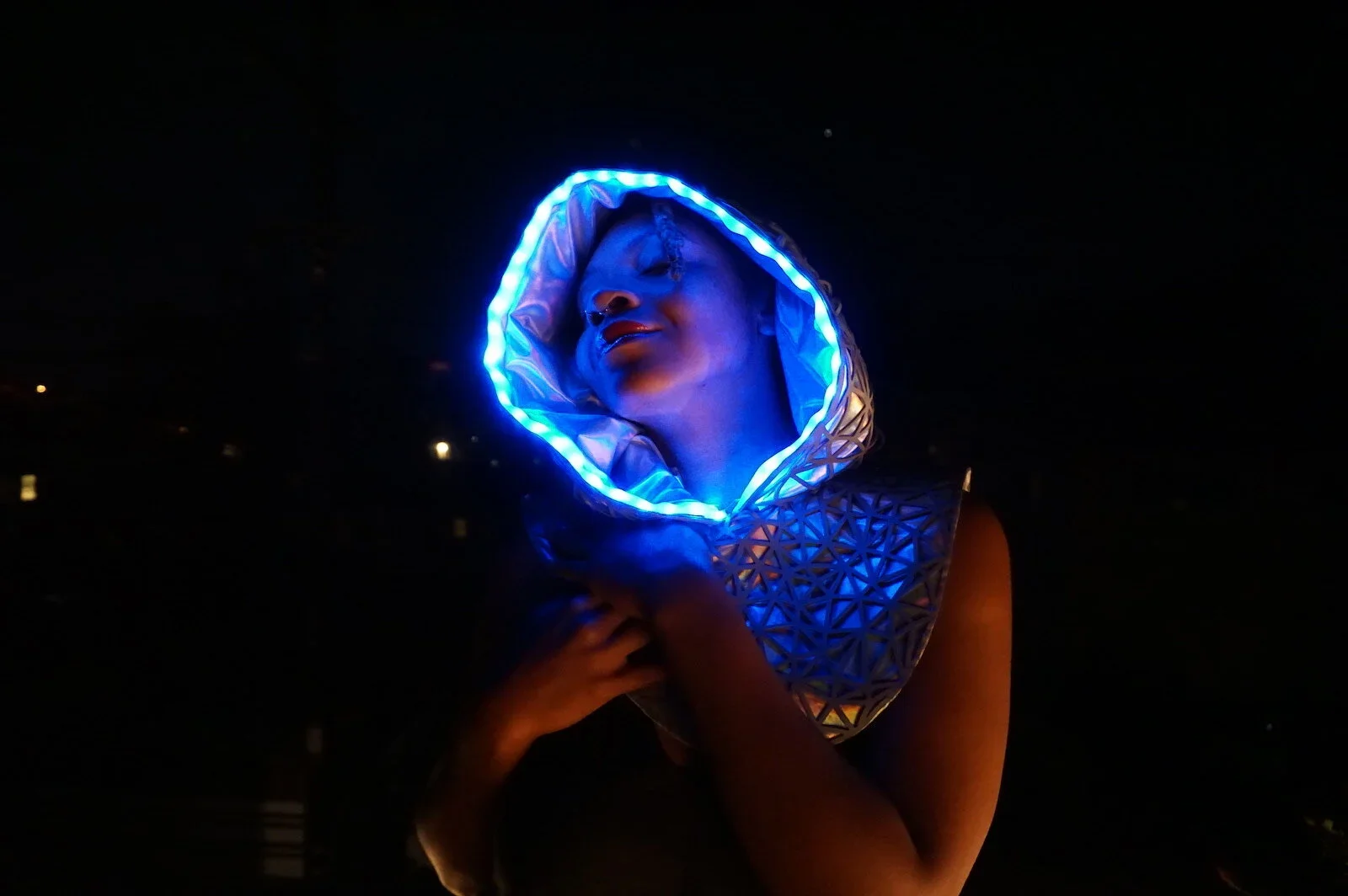
At night or in low light, the garment emits a softly fading blue light — designed to evoke the rhythm of slow, deep breathing. The light makes the garment feel alive, as though it is breathing alongside the wearer, inducing stillness and an invitation to pause.
The overall experience is intentionally pleasurable. Durga is not a medical device or a clinical tool. It is a companion — something you want to wear, want to return to, and want to share.
Making
Durga evolved from an earlier prototype, IO<3, developed during Fabricademy 2017. The redesign focused on creating a garment that was more wearable, more embracing, and easier to put on and take off — a hoodie-inspired form that could function as both armour and sanctuary.
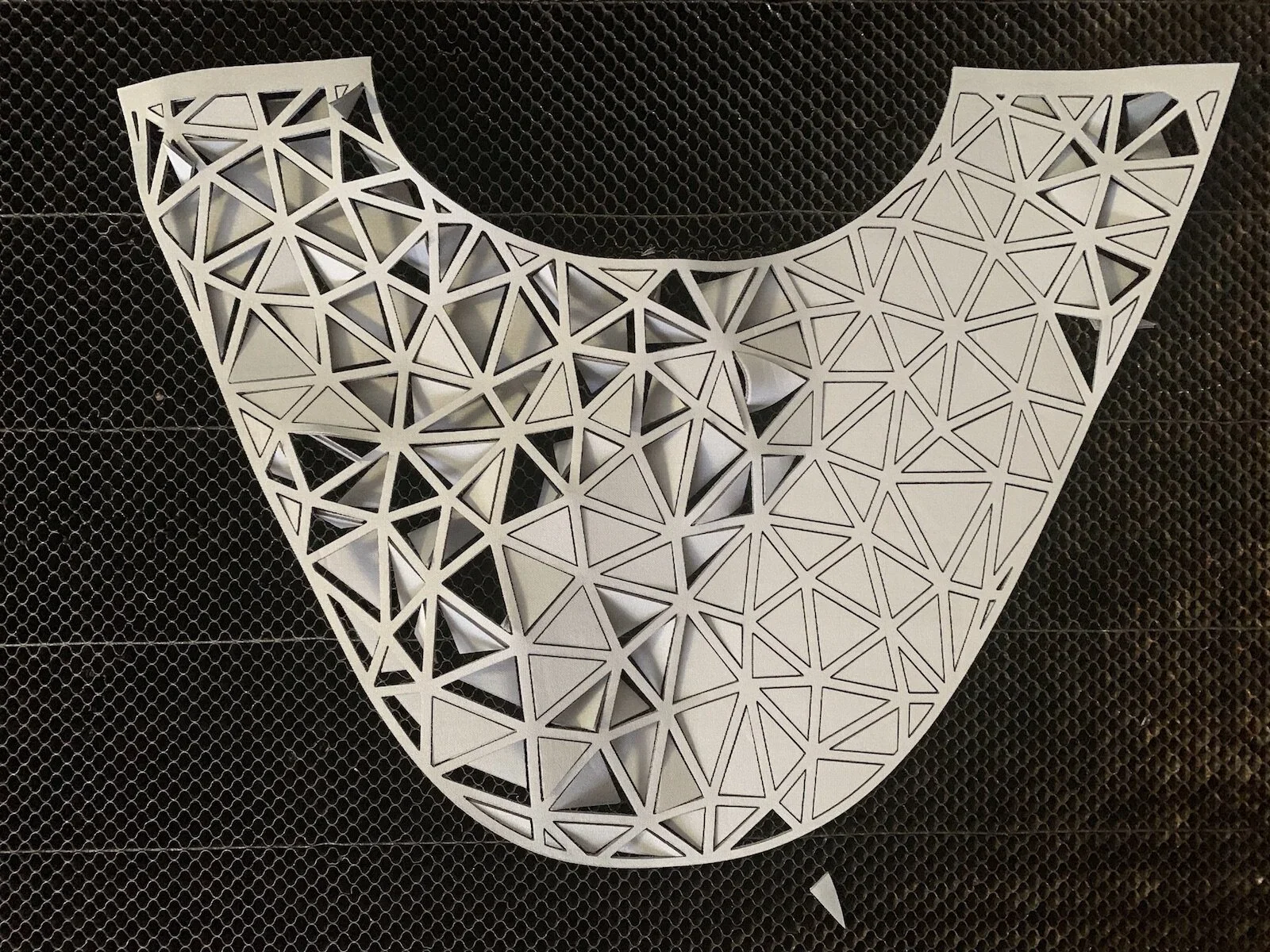
The outer layer is laser-cut grey neoprene, patterned using a Delaunay mesh generated in Grasshopper — a parametric design plugin for Rhinoceros. The geometric pattern gives the garment a structural, protective quality, like a second skin with its own logic. The inner layer is silver iridescent Lycra: light, soothing, and quietly joyful against the body.
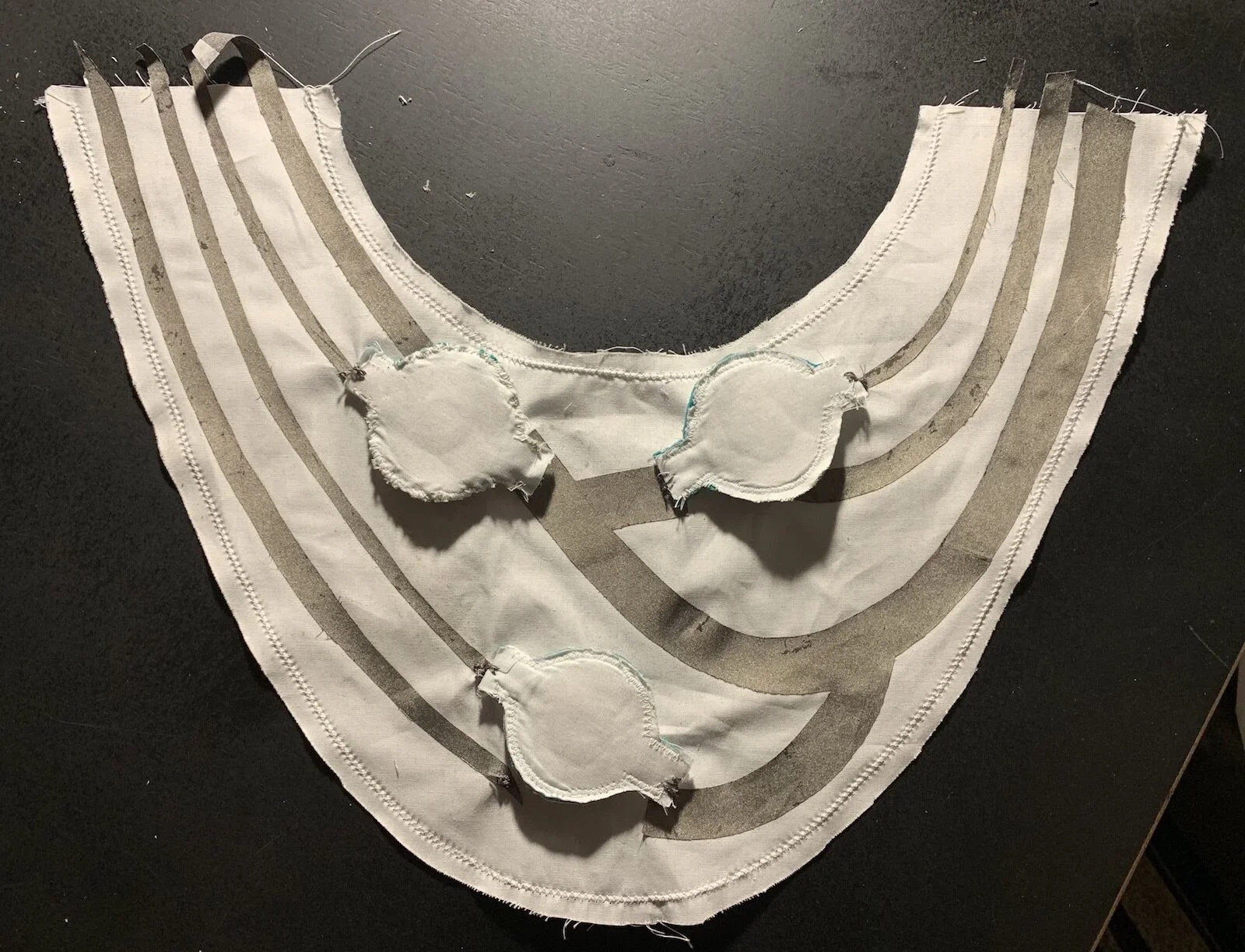
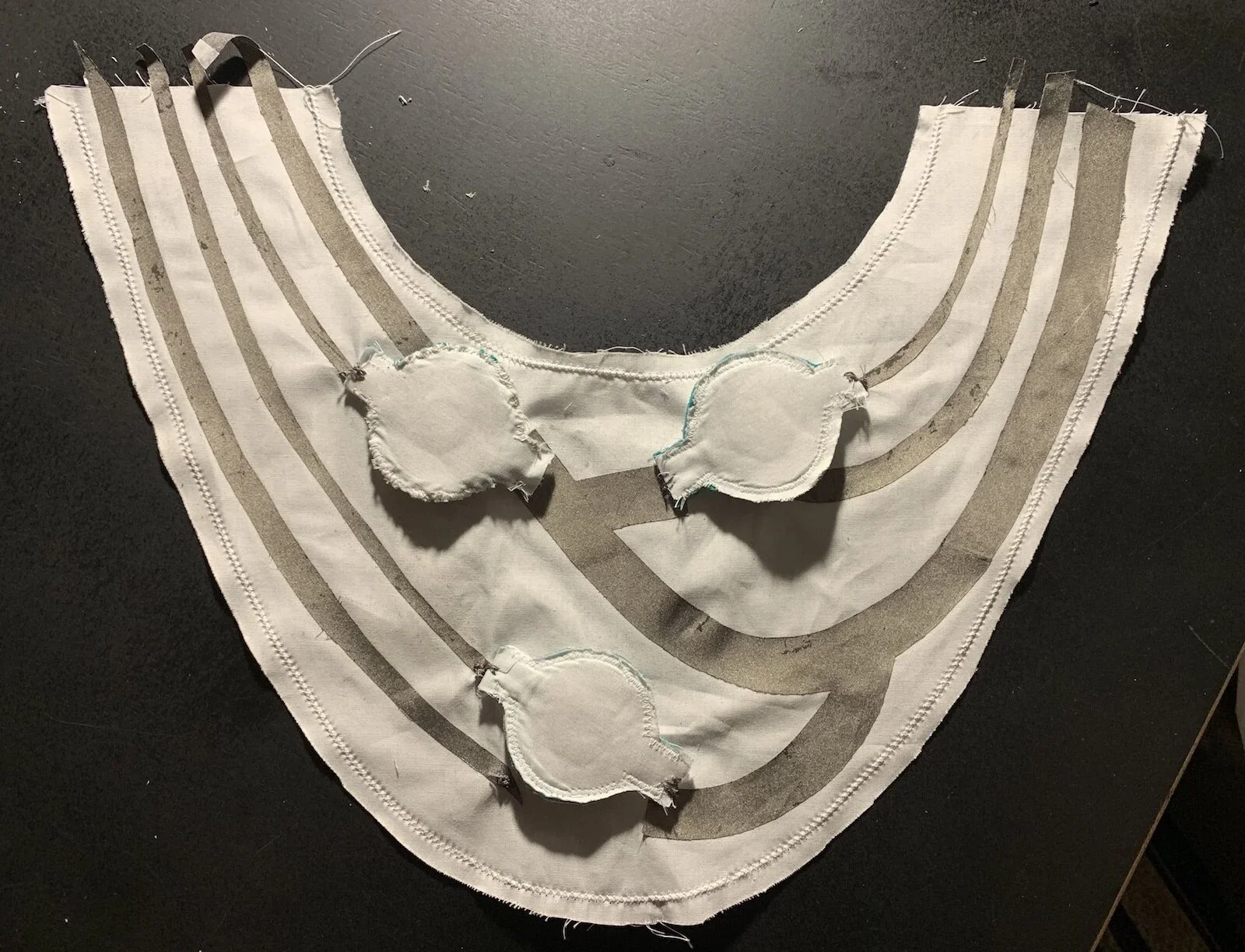
The electronics — conductive fabric, conductive thread, five vibration modules, and a microcontroller — are integrated into the garment's structure, invisible from the outside, responsive from within.
OUTcome
Durga was accepted as a finalist at Reshape 19 | Cognified Matter, an international design competition, in the Smart Products category. Presenting to a multidisciplinary audience of artists, scientists, and designers, the response centred on two things: the concept of self-empathy as a design intent, and the relevance of embodied self-care to the tensions of contemporary life.
Both of those responses confirmed what the project set out to explore: that there is a genuine and underserved design opportunity at the intersection of somatic experience, wearable technology, and emotional wellbeing.
You can view more about the making of the project here.
REFLECTION
Regenerative design is most often discussed at the scale of ecosystems, supply chains, and cities. But restoration has to start somewhere — and the most intimate scale is the human body itself.
Durga taught me something I carry into every project: that sustainable behaviour change rarely begins in the mind. It begins in the felt sense of safety, pleasure, and presence that makes new ways of being feel possible rather than effortful. Whether I am designing a digital health feature, facilitating a cross-functional workshop, or thinking about how communities might live differently within ecological limits, that insight shapes how I approach the work.
You cannot design for a regenerative world without understanding what restoration feels like from the inside. Durga is where I learned that.
Skills demonstrated
Embodied interaction design · Somatic research · Behavioural design · Wearable technology · Parametric design · Digital fabrication · Electronics prototyping · Concept development · Self-directed research · On-demand manufacturing